main page
DISCLAIMER
This is just for fun, I will rework things but hopefully this is a fun 7 min read. Regardless I think the Veritasium videos on analog computing gave me brainworms and I'm about to make it your problem. Being surrounded by the charm of digital computers all my life, I can't help feel mystified by these silly guys. Even if these computers never make a comeback, I hope I am able to share the spark I see in them.
What are they?
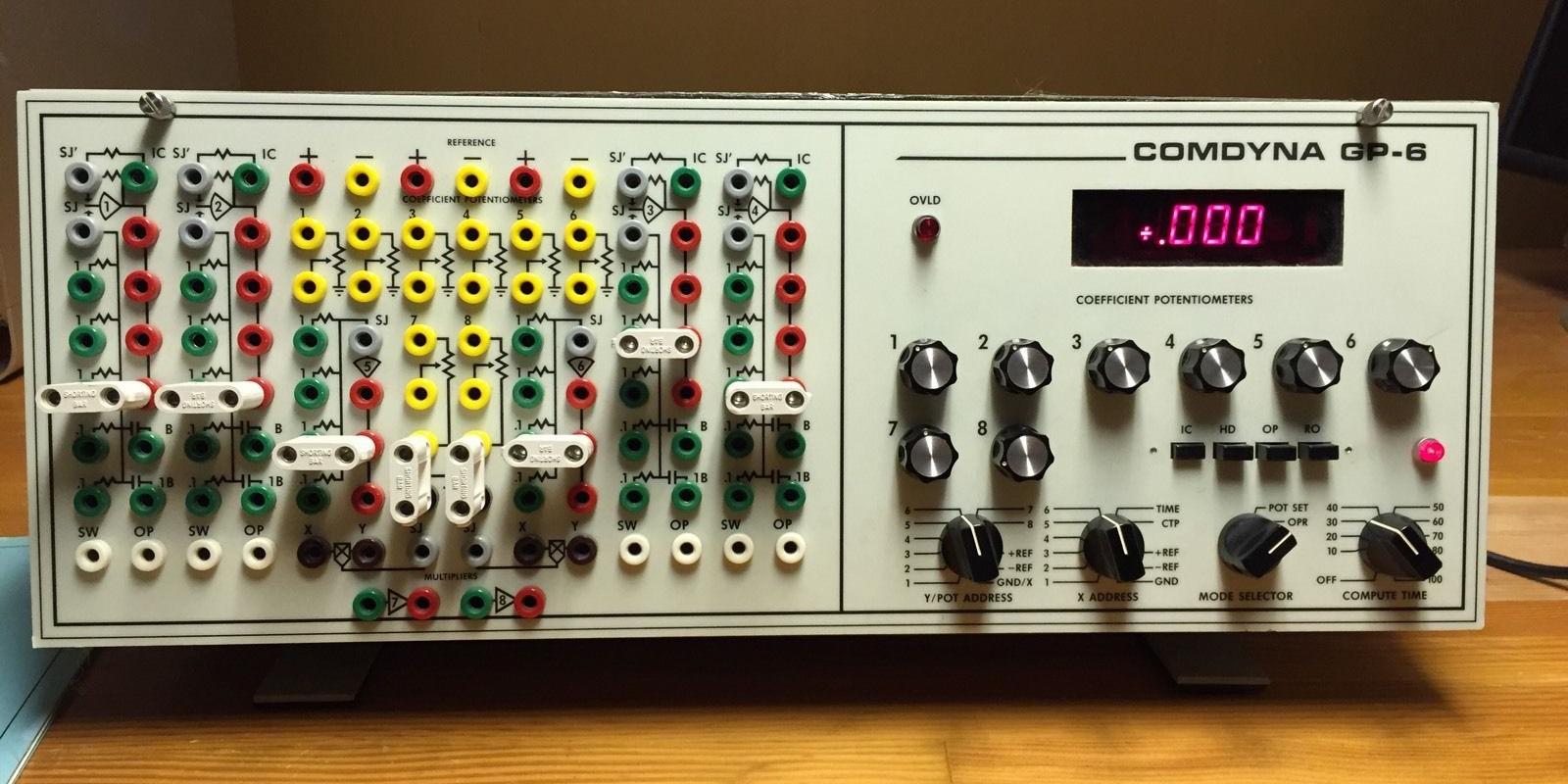
Analog computers are used for creating an analog of an existing thing. Basically the computer is running a simulation with calculus, although I wont bore you with heavy equations/math, promise! c:
How do they work?
Anything physical that we can trick into doing math, we've made into computers. A electronic voltage, the number of turns on a shaft, the distance of a paper, even hydraulics have been used to represent signals for analog computing. As long as whatever is representing the analog signal can change within a range of two numbers (ex: any number within 10 to -10), it works! Along with being continuous, all math operations are happening at the same time as all other operations of a program. These features make analog computers function very differently from digital computers in terms of use and the components that make them up. Yet, I would like to show that the math operations commonly used are actually deceptively simple. (for clarity I will be assuming you are using an electronic analog computer but other types might apply)
Setting the X axis to time, the Y axis is the range for the analog signals. Red is the input, and blue is the output.
Coefficient
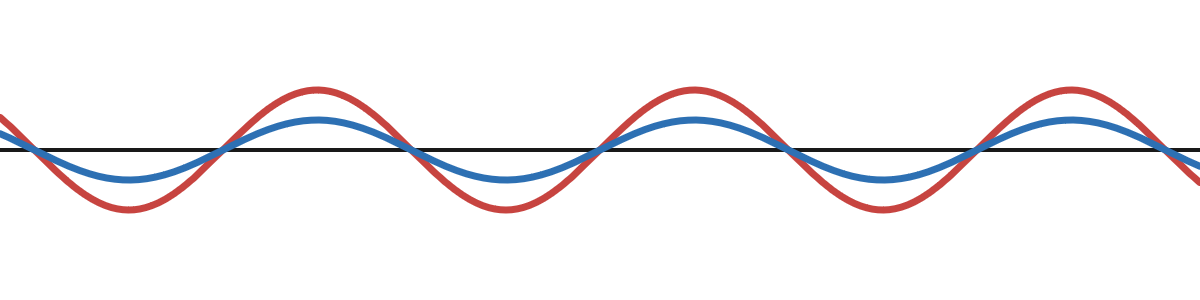
This math operation takes our input, and multiplies it by a value we set manually to our output. The set value in this example is .5, but like our signals, this multiplier's value may be anything within our computer's range.
Inverter

The inverter takes the input, and flips the sign (positive turn to negative values, and vice versa).
Most math operations are pretty self-explanatory. Adders add signals together, Multipliers multiply analog signals. But, nothing compares to...
✨️Integrators✨️
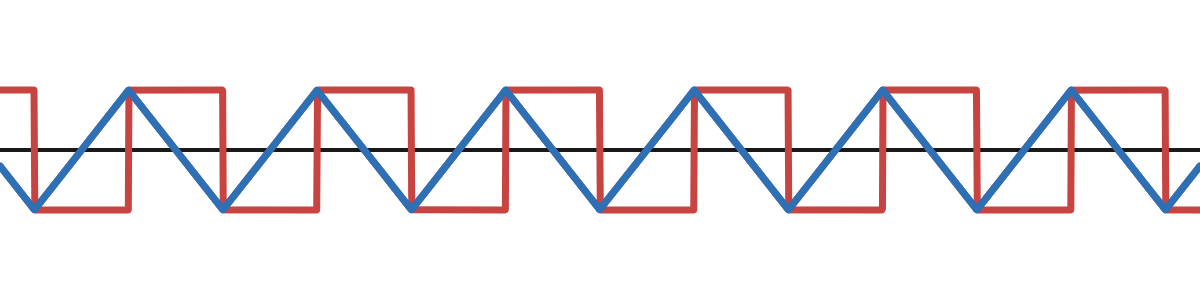
Integrators are the bread and butter of analog computers! The integrator adds up all inputs over time, and outputs the running total. Think about it like a cup slowly filling up with water, your input is the flow into(or out of) the cup while your output is the fullness of the cup. Before, all you were able to solve were algebra equations. Now you can suddenly do so much more by introducing time into your toolbox.
The Program
Understanding how the math operations work, we can start wiring up a program. Here's how we are going to represent our mathematical operations visually.
- Each math operation is going to be represented with a box
- Lines will represent connections
- Connections on the left side of the box are inputs
- Connections on the right side of the box are outputs.
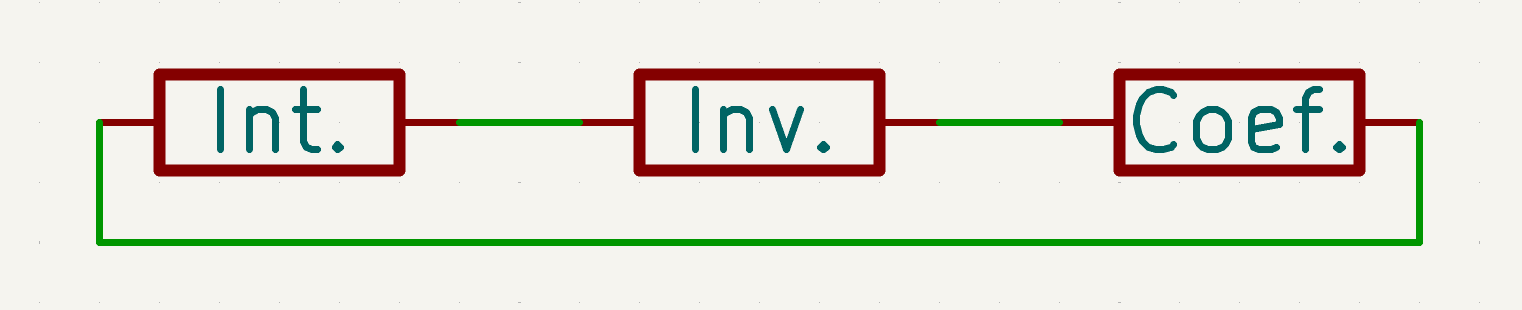
To create a (simplified) patching diagram of exponential decay, connect the following: Take an integrator, and set it to the highest possible starting value. Then, output the integrator to an inverter, and then output that to a coefficient, which finally outputs to the starting integrator creating a loop. Observe the output of the inverter to get exponential decay!
Okay, but what does it do?
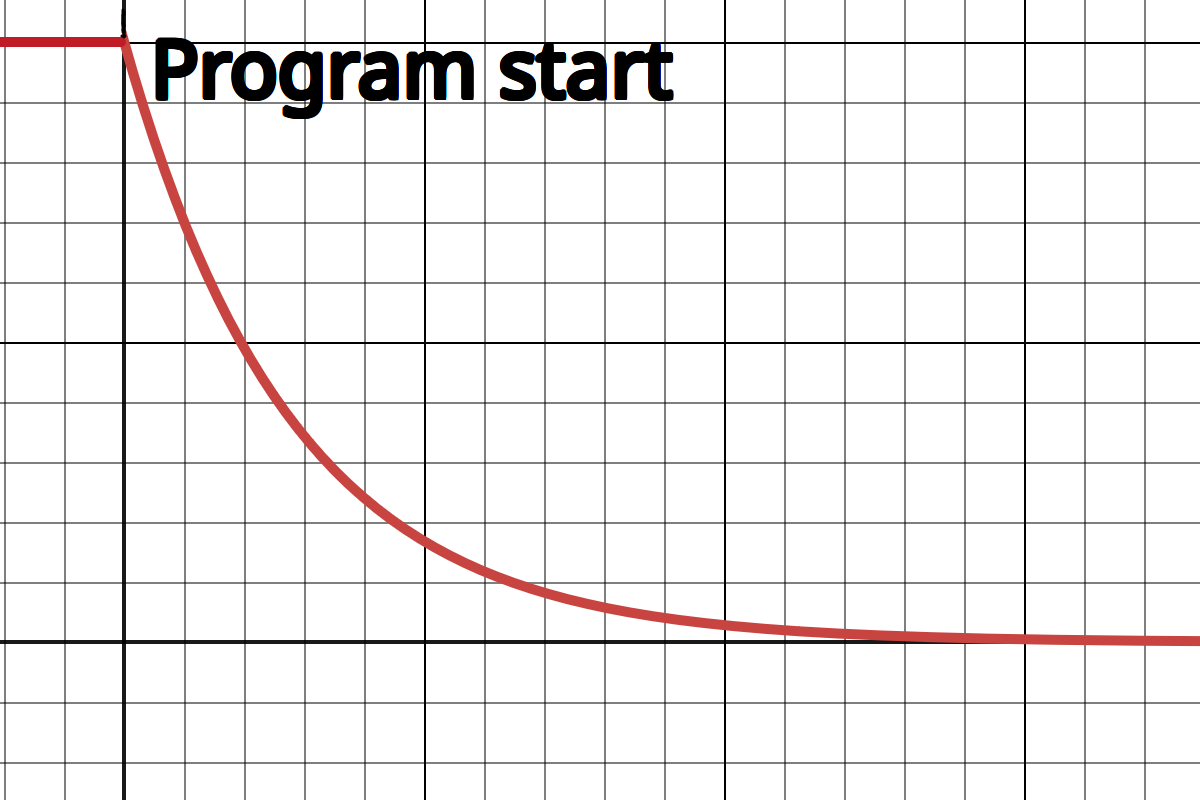
Exponential decay models many phenomena in many real world situations. From radioactive atoms, pharmacology, beer foam and much more. Having a working analog to these real world phenomena allows us to make inferences based on computer simulations. We can modify our program by adjusting the coefficient to change the decay rate (how fast the slope falls) and the starting value of the integrator (how much quantity there is to decay).
Using a real analog computer
Theory and desmos graphs are cool n' all, but what about running an actual analog computer? Let’s run it on my home-brew electronic analog computer, Galileo.
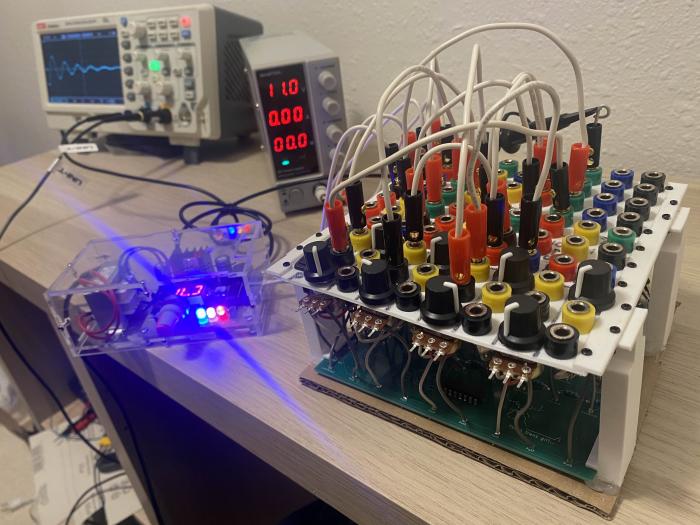
A couple differences worth mentioning with my computer...
- A module called the machine unit is providing an output with the highest value my computer can handle
- Integrators and adders automatically invert their outputs
- Integrators have an input which allows setting the starting value with an analog signal
- Coefficients are adjusted by physical knobs to get the desired value
With these differences in mind, we can adjust our patching diagram to manually program the patch diagram into the analog computer to get exponential decay. The Coefficients can be set to scale to the desired phenomena.
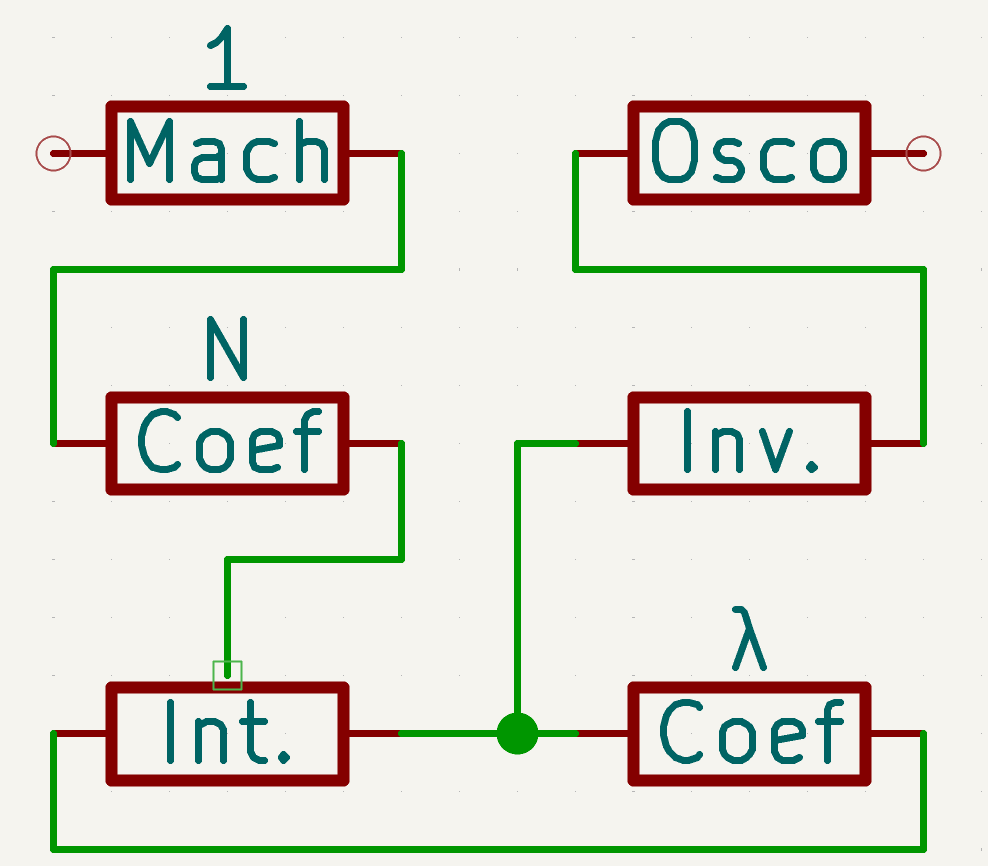
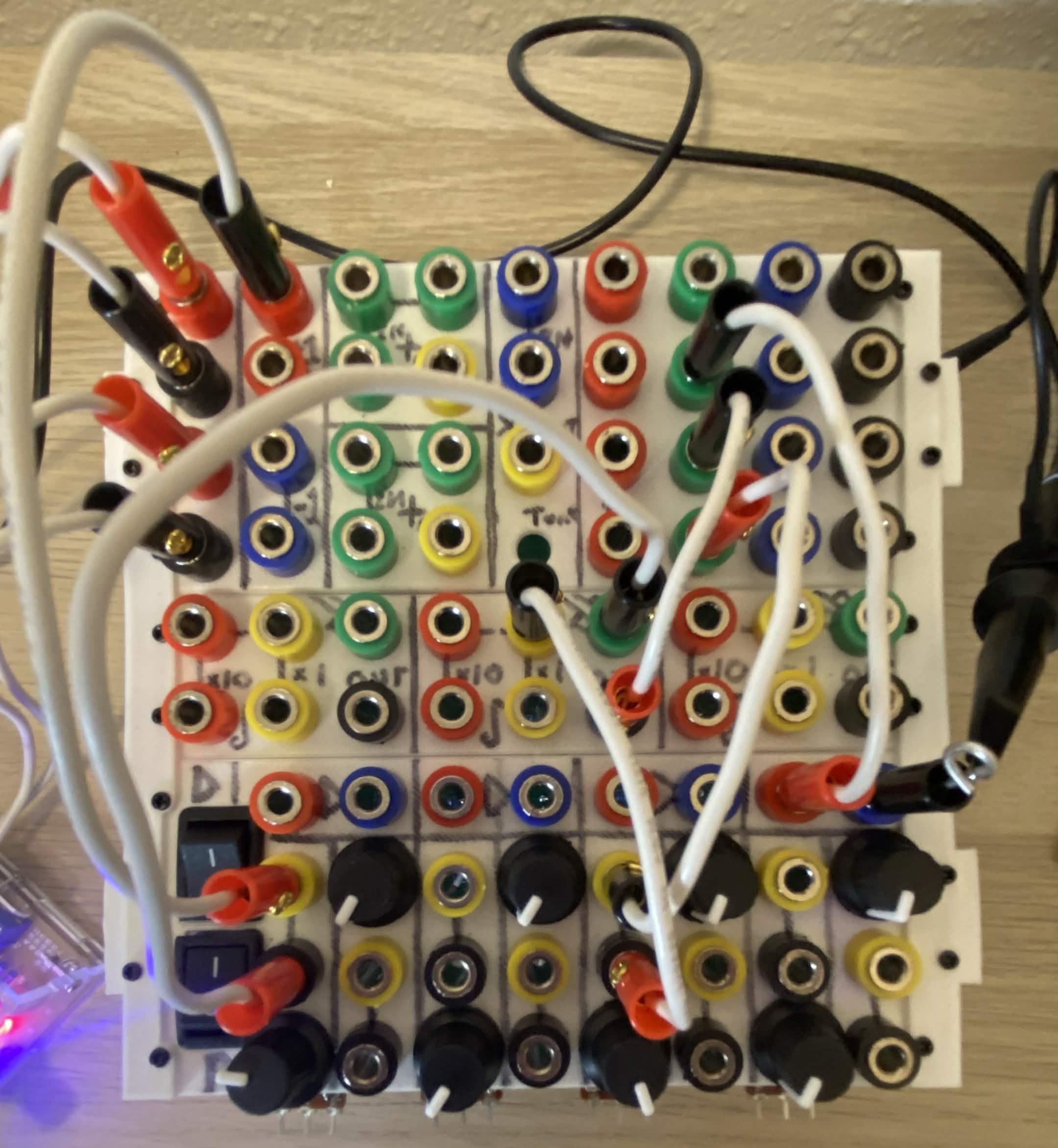 Taking the output and plugging it on my oscilloscope, a simulation of the desired phenomena can be recorded.
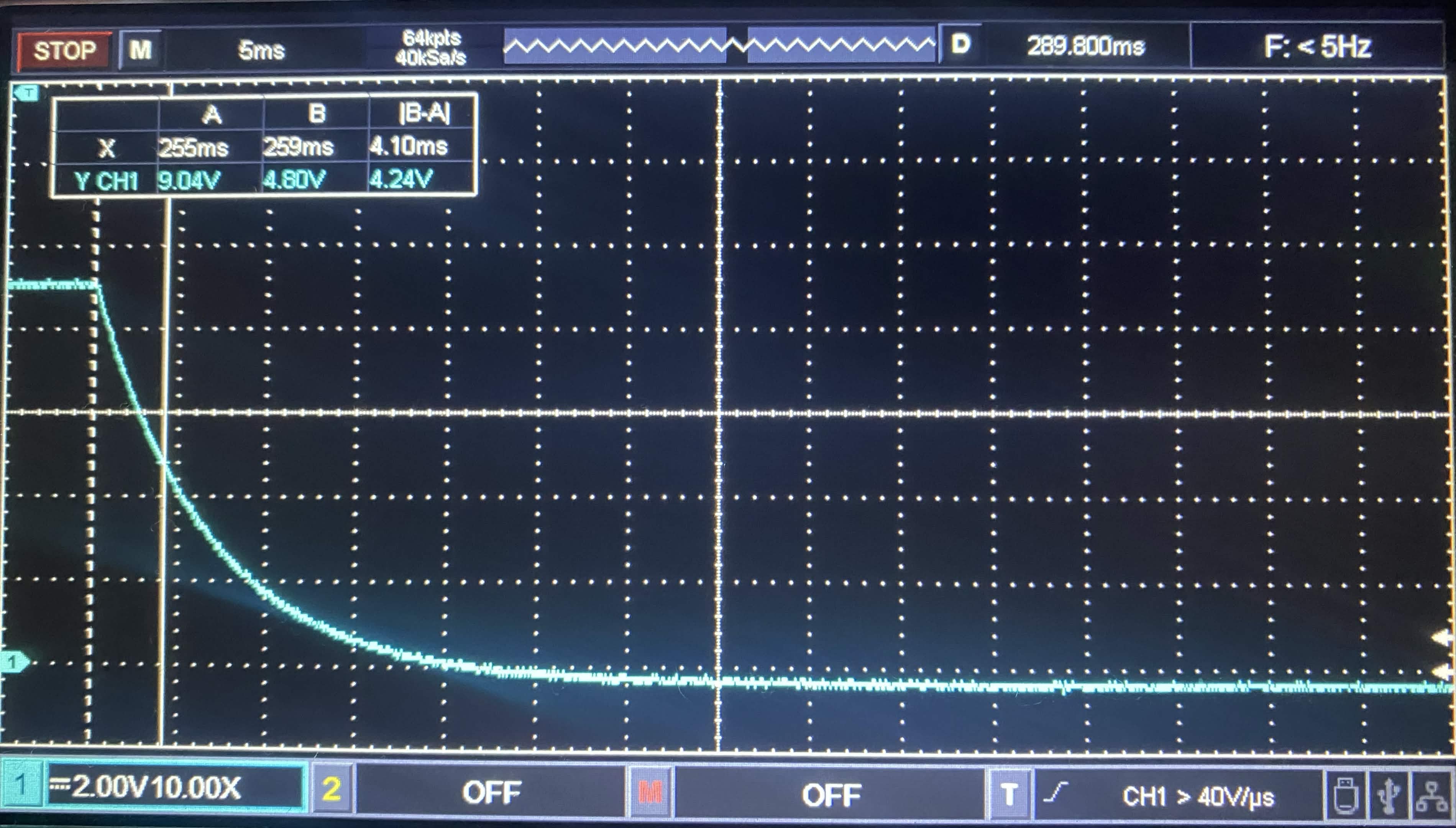
The hard part
I currently do not know enough about writing programs for analog computers, and hope to someday come back to explain! (spoiler its a lot of differential equations)
That's it for now, I made the graphs in desmos, I heavily used the analog computing wikipedia page, the exponential decay wikipedia page and the analog thing documentation as reference/for crosschecking. I also used www.analogmuseum.org for the first refrence image (the first computer shown is a COMDYNA) Also thank you to my friends for crossreading for readability c: wawa